6-2
Cisco IP Telephony Solution Reference Network Design
956662
Chapter 6 Call Processing
Call Processing with Cisco CallManager Releases 3.1 and 3.2
Note
If either the server port or the Ethernet switch port is left in AUTO mode and the other port
is configured manually, this will cause a mismatch. The best practice is to configure both the
server port and the Ethernet switch port manually.
·
Cisco recommends that you leave voice activity detection (VAD) disabled within the cluster. VAD
is disabled by default in the Cisco CallManager service parameters, and you should disable it on
H.323 dial peers by using the no vad command.
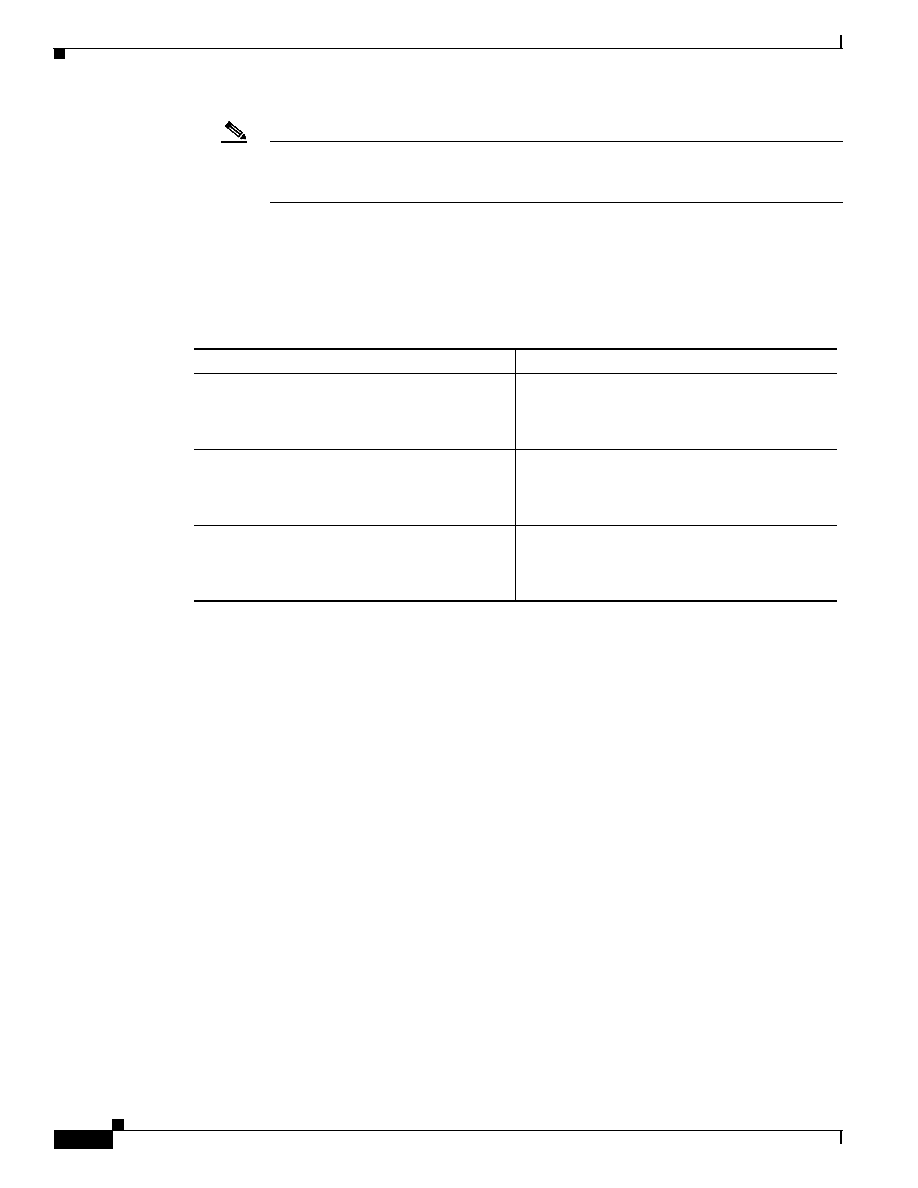
lists the general types of servers you can use in a cluster, along with their main characteristics.
Call Processing with Cisco CallManager Releases 3.1 and 3.2
The following guidelines apply to Cisco CallManager releases 3.1 and 3.2:
·
Within a cluster, you may enable a maximum of 6 servers (4 primary and 2 backup servers) with the
Cisco CallManager Service. Other servers may be used for more dedicated functions such as Trivial
File Transfer Protocol (TFTP), database publisher, music on hold, and so forth.
·
You can configure a maximum of 800 Computer Telephony Integration (CTI) connections or
associations per server, or a maximum of 3200 per cluster if they are equally balanced among the
servers. For more information, refer to
·
Each H.323 device can support up to 500 H.323 calls with Cisco CallManager Release 3.1 or 1000
calls with Cisco CallManager Release 3.2.
Call Processing with Cisco CallManager Release 3.3
The following guidelines apply to Cisco CallManager release 3.3:
·
Within a cluster, you may enable a maximum of 8 servers with the Cisco CallManager Service.
Other servers may be used for more dedicated functions such as TFTP, publisher, music on hold, and
so forth.
·
You can configure a maximum of 800 CTI connections or associations per standard server, or a
maximum of 3200 per cluster if they are equally balanced among the servers.
Table 6-1
Types of Cisco CallManager Servers
Server Type
Characteristics
Standard server (not high availability)
·
Single processor
·
Single power supply
·
Non-RAID hard disk
High-availability standard server
·
Single processor
·
Multiple power supplies
·
Single SCSI RAID hard disk array
High performance server
·
Multiple processors
·
Multiple power supplies
·
Multiple SCSI RAID hard disk arrays