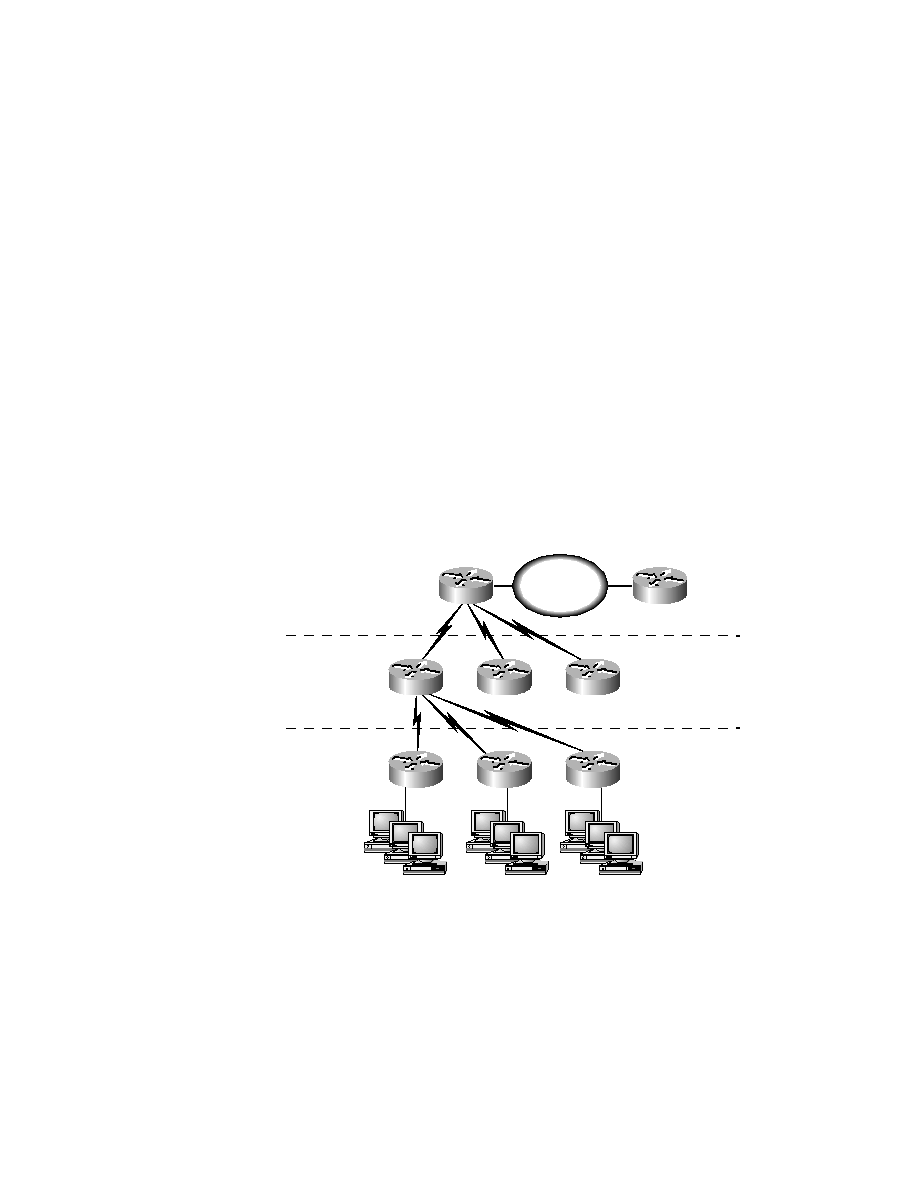
essarily mean three separate devices. Consider the OSI model, another logi-
cal hierarchy. The seven layers describe functions but not necessarily
protocols, right? Sometimes a protocol maps to more than one layer of the
OSI model, and sometimes multiple protocols communicate within a single
layer. In the same way, when you build physical implementations of hierar-
chical networks, you may have many devices in a single layer, or you might
have a single device performing functions at two layers. The definition of the
layers is logical, not physical.
local" has almost become a cliché in the networking world. However, the
underlying concept has merit. Hierarchical design lends itself perfectly to ful-
filling this concept. Now, let's take a closer look at each of the layers.
layer
layer
layer