directional and bidirectional. CBT utilizes the bidirectional method for its
multicast data distribution. Because CBT uses a shared tree system, it desig-
nates a core router that is used as the root of the tree, allowing data to flow
up or down the tree.
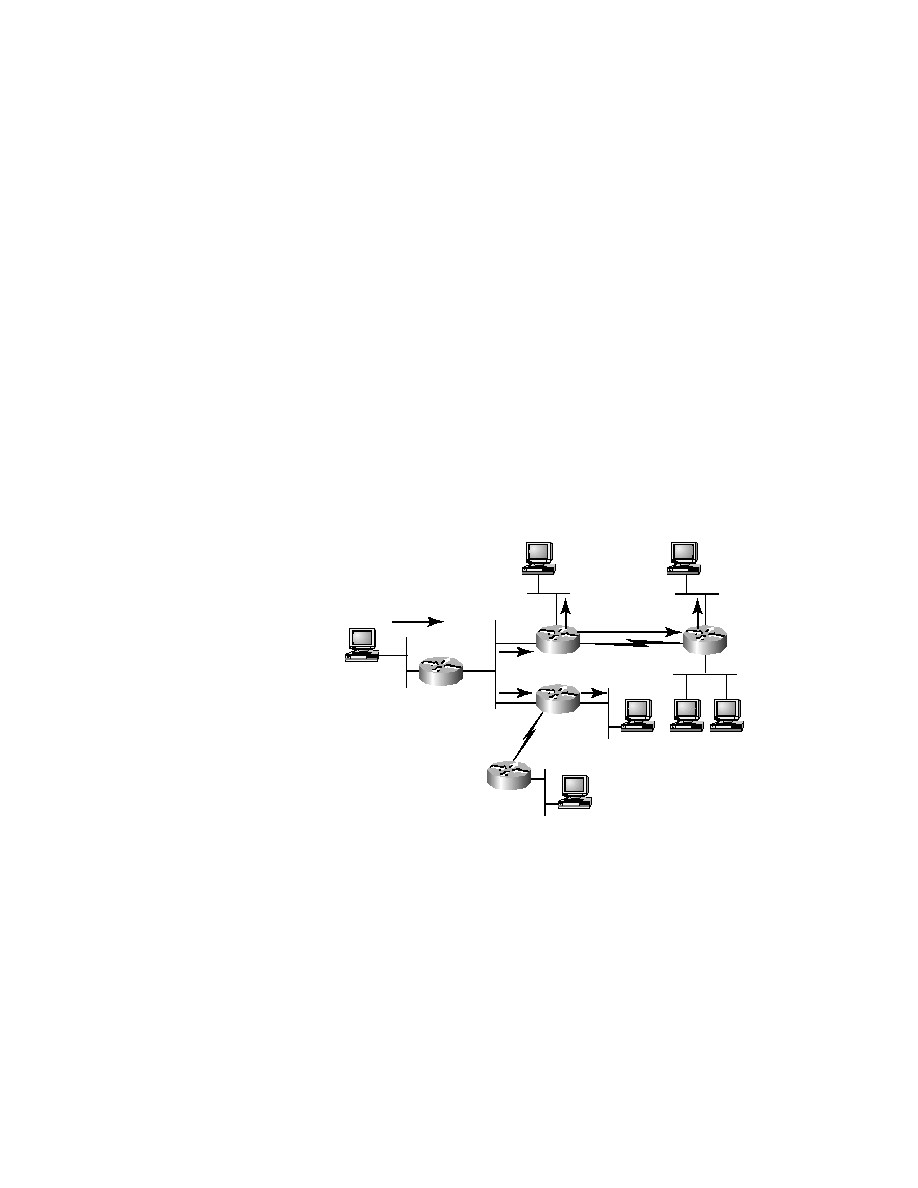
data to the CBT-enabled router, the router then forwards the data out all
interfaces that are included in the tree, not just the interface that leads to the
core router. In this manner, data flows up and down the tree. Once the data
gets to the core router, the core router then forwards the information to the
other routers that are in the tree. Figure 9.20 depicts this process.
of the tree only if they have active members directly connected. Dense mode
operates on the initial premise that all PIM neighbors have active members
directly connected. The tree changes when the directly connected routers
request to be pruned from the tree.