370
Chapter 9
Multicast
whether there are group members on the router or not. This is why it is con-
sidered flooding.
When multiple, equal-cost links exist, the router with the highest IP
address is elected to be the incoming interface (used for RPF). Every router
runs the RPF when it receives the multicast data.
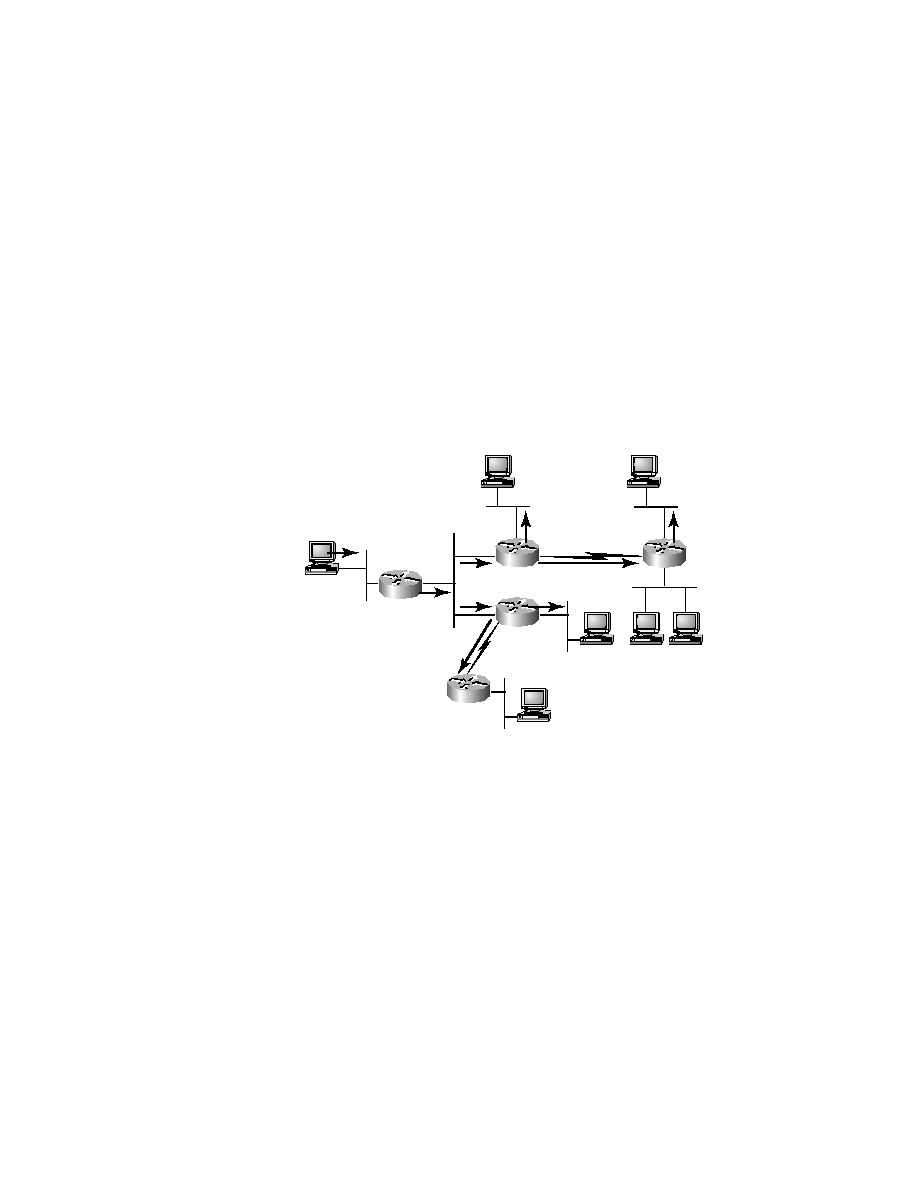
Figure 9.17 depicts the initial multicast flooding in a PIM DM network.
You can see that the data is forwarded to every PIM neighbor throughout the
network. Once a PIM neighbor does the RPF calculation, the router will then
forward the data to interfaces that have active members of the group.
F I G U R E 9 . 1 7
PIM DM flooding
Pruning
After the initial flooding through the PIM neighbors, pruning starts. Pruning
is the act of trimming down the SPT. Because the data has been forwarded
to every router, regardless of group membership, the routers must now
prune back the distribution of the multicast data to routers that actually have
active group members connected.
Figure 9.18 shows the pruning action that occurs for the PIM DM routers
that don't have active group members. Router5 does not have any active
group members, so it sends a prune message to Router3. Even though
HostA
HostF
HostB
HostC
HostD HostE
Source for
224.2.125.125
Member
224.2.125.125
Member
224.2.125.125
Member
224.2.125.125
Router1
Router2
Router3
HostG
Router5
Router4
Copyright ©2000 SYBEX , Inc., Alameda, CA
www.sybex.com