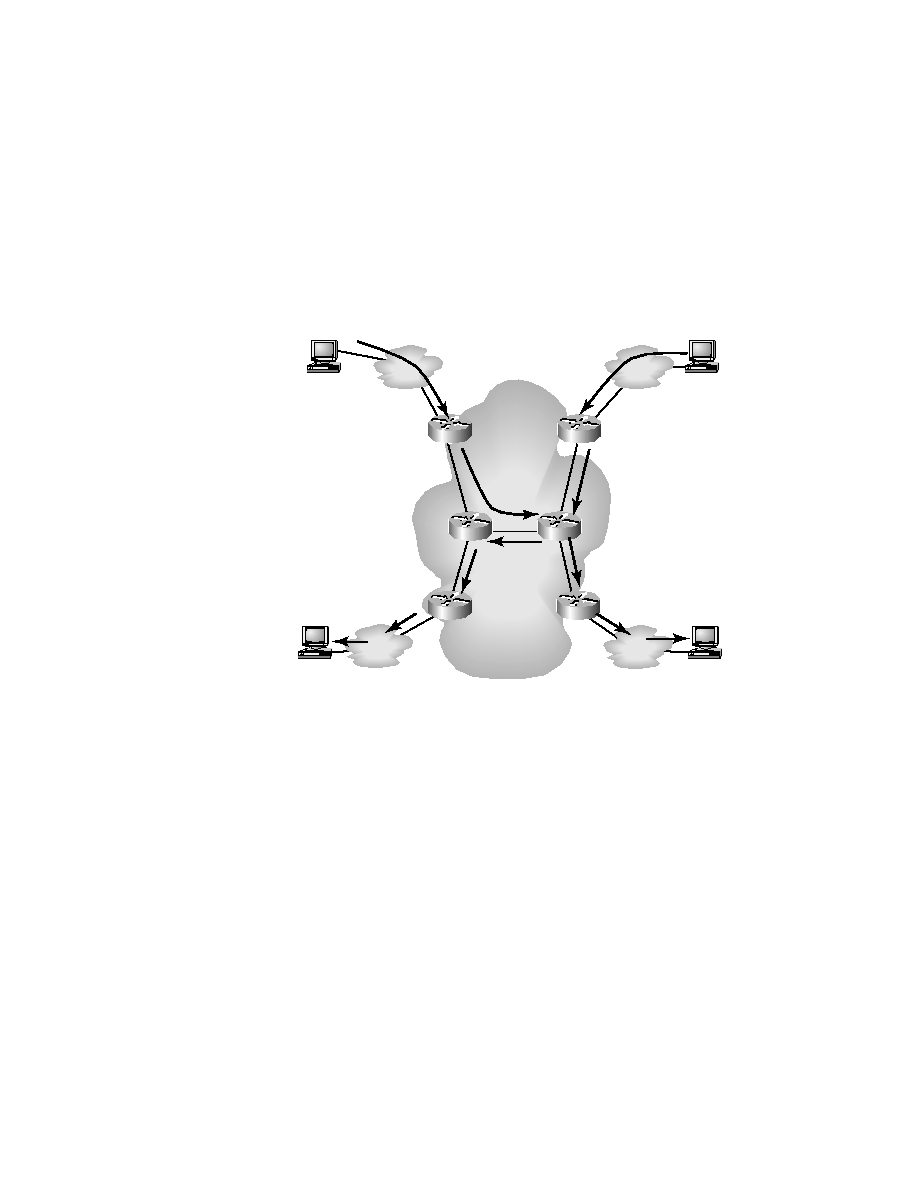
SPT to forward the data to the members of the group. Figure 9.13 depicts
how the shared tree distribution works.
recipients of a multicast group receive the data from a rendezvous point (RP)
no matter where they are located in the network.
receiver lives upstream from the RP, it can receive data directly from the
upstream source. Figure 9.14 depicts how this works. As you can see, HostA
is a source for group 224.2.127.254 and HostB is a receiver of that same
group. In a bidirectional shared tree, data goes directly from HostA to HostB
without having to come from the RP.
(Shared Root)