process. Usernames and passwords still must exist on the remote router, but they do not cross
the wire as they did with PAP.
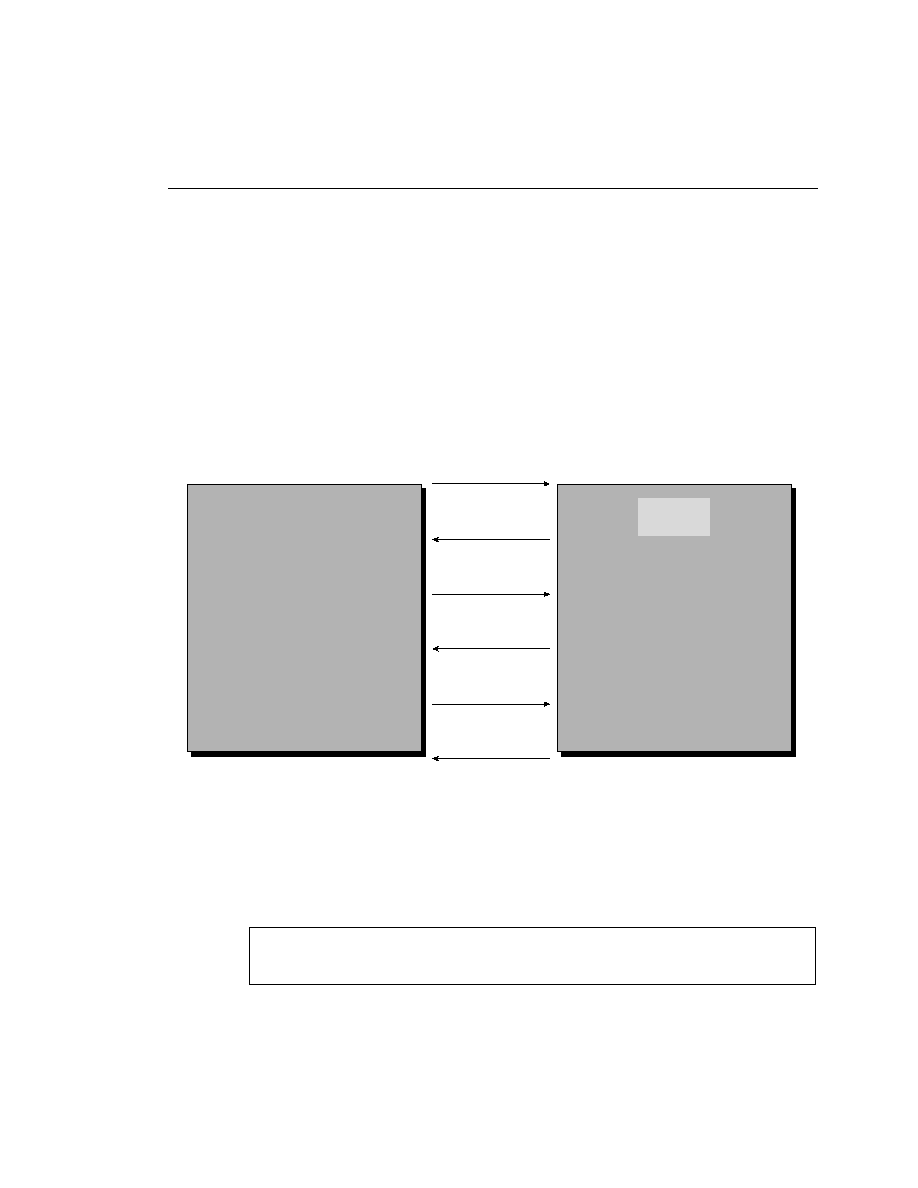
PPP link is established. The remote end responds with a one-way hash function. This hash is
generally an MD5 entity. If the value of the hash matches what the router expects to see, the
authentication is acknowledged. If not, the connection terminates. Figure 5-5 depicts CHAP
authentication.
variable challenge values (that is, unique values) for each authentication attempt ensures that
no two challenges are the same. CHAP also repeats a challenge every two minutes for the
duration of the connection. If the authentication fails at any time, the connection is terminated.
The access server controls the frequency of the challenges. Example 5-2 shows a basic CHAP
configuration.
RouterA(config)#interface async 0
RouterA(config-if)#enapsulation ppp
RouterA(config-if)#ppp authentication chap
Password: twinz